
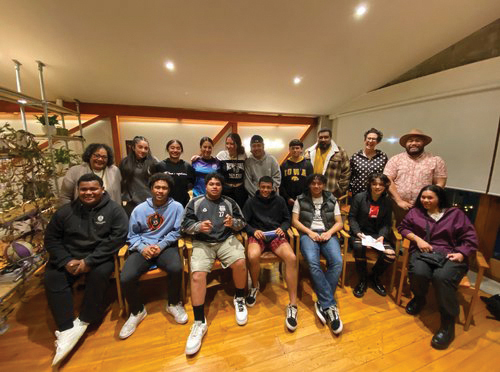
Tangata Atumotu is Canterbury’s longest-standing Pasifika provider. Its vision is “Healthy, thriving and connected Pasifika People.”
And because they know that getting health outcomes involves a lot more than health services, they have a wide range of programmes that bring people together to learn, to have fun and to celebrate their culture.
Tangata Atumotu was established over 21 years ago, at a time when there was government funding to support the establishment of Pasifika NGOs. Sometimes it has been a challenge to survive, but now Tangata Atumotu is thriving.
When Covid hit, the organisation’s ability to reach out and make sure that Pasifika people were vaccinated and got the welfare support they needed, has connected them with thousands of Pacific people who needed their help.
As a result of this increased connectedness to the Pasifika community in Ōtautahi, Tangata Atumotu now has many contracts and partnership agreements to provide a number of programmes for their community.
In the space of two years Tangata Atumotu’s staff have increased from 17 to 30, as new people have been brought on board to meet the increasing demand.
New health services include Healthy Homes, Healthy Lifestyles, Ta’iala hospital support, Care in Community Covid support, Island Wealth financial support, stop smoking support and partnership community workers who help people navigate the health system and stay well in their own homes.
Carmen Collie, who is the General Manager of Tangata Atumotu, says their community programmes are based on the Fonofale model of health, which promotes a holistic view of health that focuses on overall wellbeing and resilience.
“We believe that connection is fundamental to wellbeing. We bring our people together to provide opportunities for fellowship and to celebrate identity. This will typically take the form of dance or craft sessions. We also believe that connection to health and social services is critical if our people are to remain healthy in the community.
“We live in an age when mental health issues are far too prevalent. Social connection is so important if we are to address mental wellbeing.
 “Those who come along to our programmes might just see it as coming together for fellowship, however we weave health education through our programmes as much as we can. For example, we use a dance programme as a platform to bring in health experts to talk about the services they offer and how to access them. The health system in Aotearoa can be very hard to navigate for those brought up in the Islands, where when you get sick you go to a hospital. Here, the aim is to keep our people out of hospital and managing their health and wellbeing in the community.
“Health literacy can be a challenge for our community. Helping families to create healthy lifestyles, access health care and manage medication are priorities.“
The organisation has also partnered with the 20/20 Trust to put hundreds of devices into homes as well as provide digital literacy training to support connectivity and provide core computer skills.
The MPP funded Island Wealth programme is designed to provide financial capability building within the Pasifika community. We have about 60 families engaged in the programme,” says Carmen. “The programme helps everyone with setting a savings goal, working out a budget and having a financial plan that for some will result in home ownership.”
MPP also funds a Youth Voices programme. This funding has been used to support young people make a short film about growing up as a Pasifika young person in Ōtautahi, with an emphasis on culture and identity, and the link between this and wellbeing. Key themes to emerge include mental health, self-care, racism, cultural identity, pride and connection.
“The idea,” says Carmen, “is that by reflecting on society, young people will have a voice on the issues that affect them, like the current smoke-free legislation which is before a select committee at the moment. Other youth voice projects have enabled reflection on things like the Dawn Raids.”
Film, TV and radio are also used to connect people and provide learning opportunities. There are two Pasifika radio programmes, spoken in English. People tuning in via the airwaves or podcast, can hear about a wide range of topics that are of interest to the Pasifika community including education opportunities and scholarships, social issues like housing and the achievements of local Pasifika people.
TAT TV also provides a platform for online access to the trust’s services. During the lockdowns these online programmes kept people in touch. At its peak, the dance programme had 147,000 views. The organisation has a huge social media following. Key messaging includes topics from mask wearing to healthy homes, upcoming events and celebrations of culture and identity.
Carmen says that they have grown so fast over the last two years, “It is time now to consolidate and embed our more recent programmes.”